
01 — Origin
Why OmniThink AI Was Founded
OmniThink AI was founded on a specific observation: retail merchandising teams have more data available than at any point in history, and less time than ever to act on it. Trend cycles that once lasted seasons now last weeks. Tariff environments that were stable for decades have become volatile from quarter to quarter. And AI shopping agents have begun selecting products on behalf of consumers before those consumers ever browse a shelf or a website. The tools most brands were using to navigate this environment were built for the world that preceded it.
The traditional retail product development workflow is a sequential chain of disconnected tools and manual handoffs. Trend data lives in a subscription report. Concepts live in a designer’s sketchbook or a shared drive. Technical specifications live in a PLM. Cost data lives in a factory email thread. A product decision that requires all four inputs takes weeks to assemble. By the time it is assembled, the trend signal that justified it may have already moved.


OmniThink AI was built to collapse that chain into a single connected workflow. Not by replacing the merchants, designers, and sourcing directors who make the decisions, but by giving them the intelligence they need at the moment they need it, so that every decision is grounded in real commercial data rather than the best available approximation of it.
The name reflects the founding principle. Agentic AI that thinks across the entire system, across trend, design, planning, sourcing, and agentic commerce readiness, simultaneously rather than sequentially. OmniThink.
02 — Differentiation
What Makes OmniThink AI Different
Most retail AI platforms address one stage of the product development workflow in isolation: a trend tool, a PLM module, a costing spreadsheet, or a recommendation engine. OmniThink AI connects all four stages in a single agentic workflow, grounded in two proprietary data layers, over one million labeled merchandising outcomes and live factory intelligence from 500+ certified factories, that no public internet dataset can replicate.
01
Commercial data foundation
The commercial data foundation is what separates OmniThink AI from platforms built on general-purpose AI. The ten-signal framework is built on over one million labeled merchandising outcomes: real product decisions made by real retail teams, mapped to their actual sell-through rates, markdown depths, and sourcing cost variances. The platform has learned what predicts full-price sell-through in fashion retail specifically, not what predicts outcomes in commerce generally.
02
Factory intelligence network
The factory intelligence network adds the second proprietary layer. Data from 500+ certified factories across global and nearshore production regions provides real cost rates, real lead times, real capacity availability, and early upstream signals on material and fabric trends moving through mill pipelines, before they surface in finished competitor product.
03
Signal 10: AI Shopping Agents
The third differentiator is Signal 10: AI Shopping Agents. OmniThink AI is the only platform that evaluates every product decision against the criteria AI shopping agents use to select products, including attribute specificity, price-to-value positioning, and trend accuracy at the time of agent selection, before development cost is committed.
03 — Philosophy
How OmniThink AI Thinks About AI and Human Judgment
OmniThink AI’s platform is built on an experts-in-the-loop architecture. Human experts review and validate AI agent output at critical decision points across trend curation, design guidance, cost modeling, and trade compliance. Automation handles the work that is systemic and data-driven. Human judgment handles the work that is contextual, relational, and creative. The goal is not to remove merchant judgment from the product development process. It is to give merchant judgment better information faster, so that every decision is made from a position of commercial clarity.
The Concern
Fashion retail’s resistance to AI adoption has often come from a real concern: that systems trained on historical data will produce regression-to-the-mean outputs, technically correct recommendations that consistently miss the products that will define the next season rather than the last. A system that recommends what sold well in the past will always be a season behind the market it is trying to serve.
The Architecture
OmniThink AI’s architecture is designed specifically to avoid this failure mode. The ten-signal framework surfaces emerging directions before they appear in historical sell-through data. Brand Fit Scoring filters those directions against each brand’s specific customer rather than the market average. And the experts-in-the-loop structure ensures that a human reviewer with domain expertise is always in the decision chain before a trend recommendation becomes a product commitment. AI agents surface, score, and synthesize. Merchants decide.
04 — Platform
The Platform
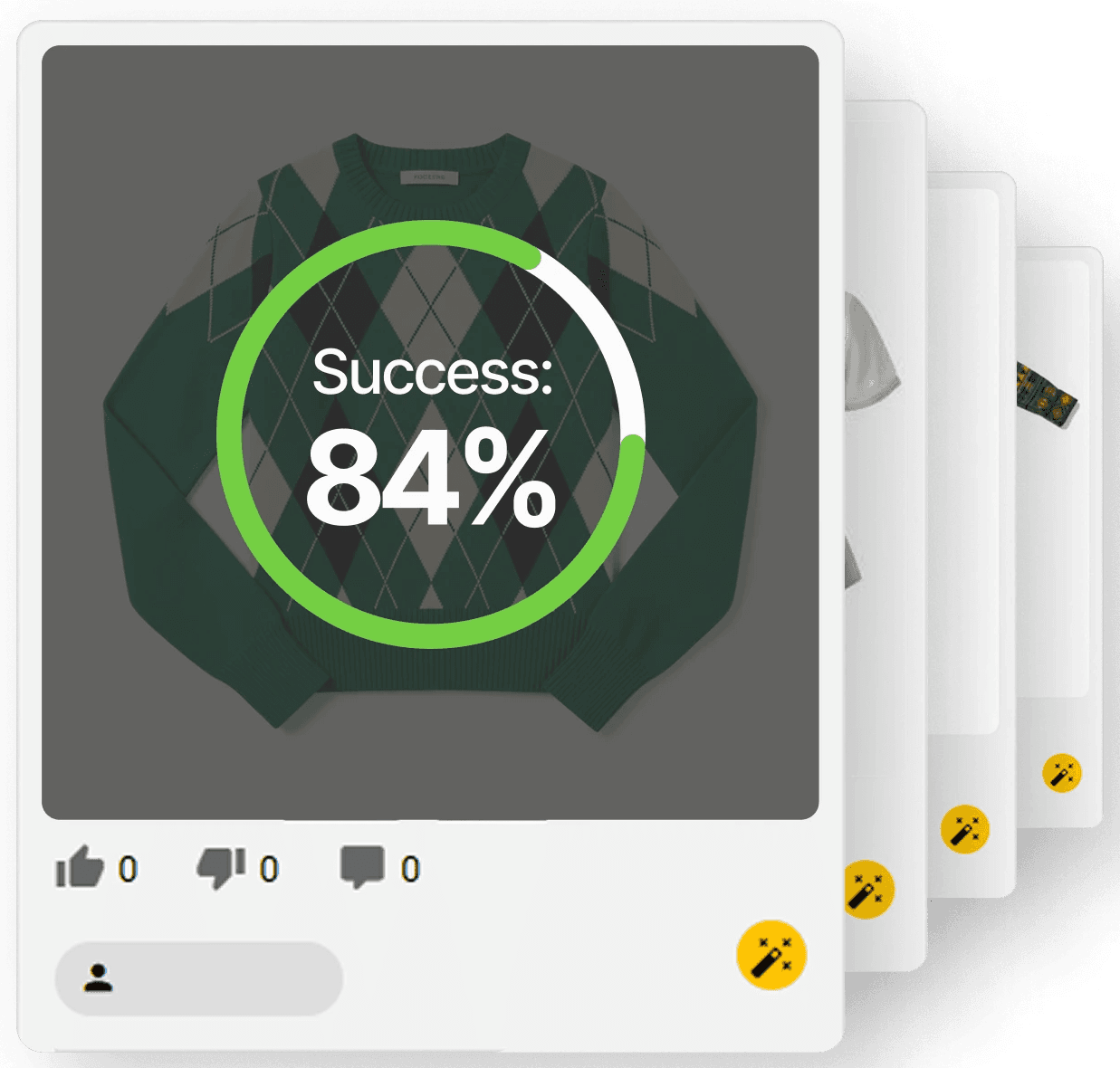
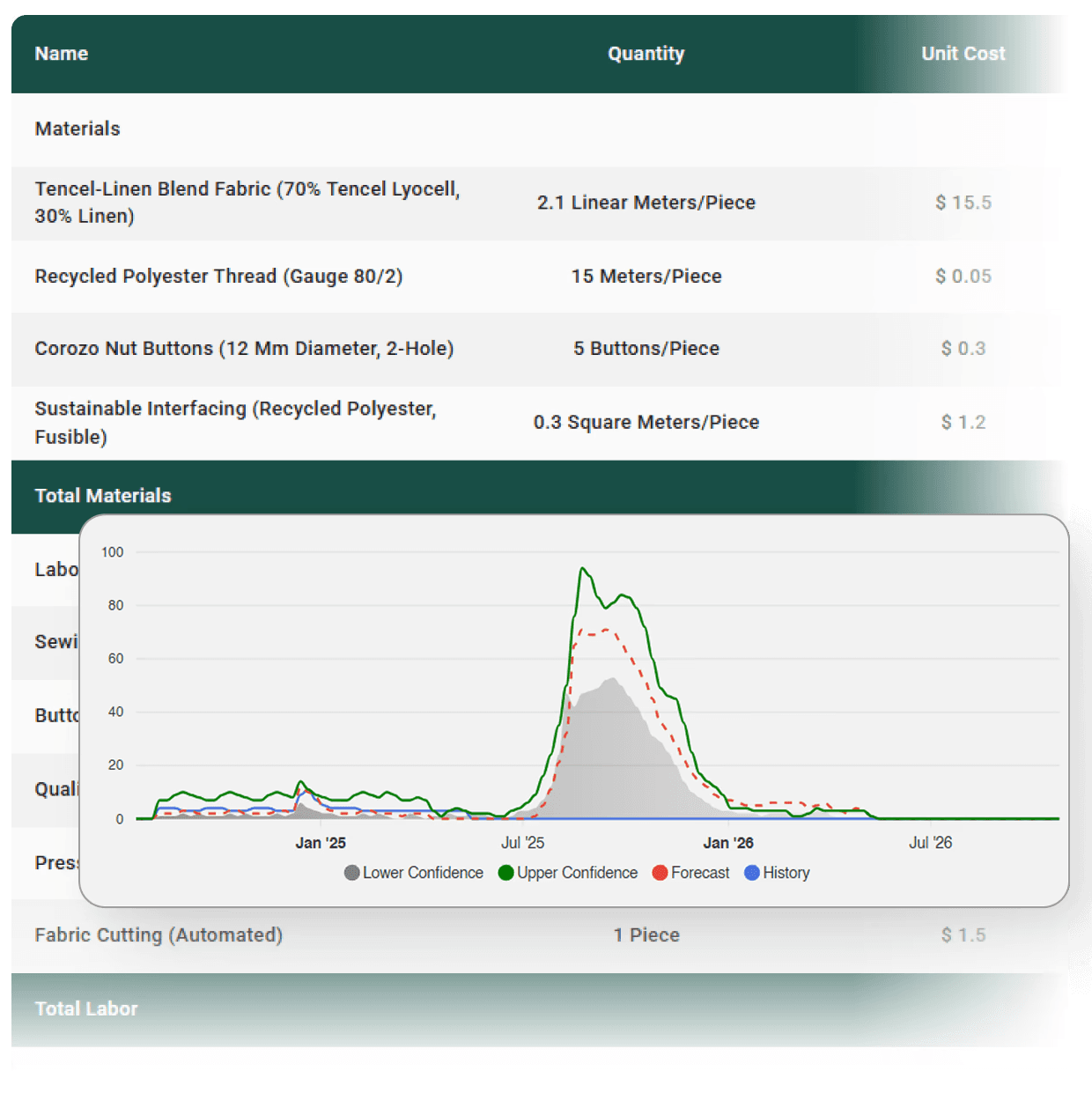
OmniThink AI operates as four connected modules in a single agentic workflow. Innovation Copilot for trend intelligence and concept generation. Visual Line Planning for range building and assortment balancing. Concept Validation for pre-sampling commercial validation. Smart Sourcing for factory matching, should-cost modeling, and tariff impact analysis. The platform deploys in 3 days and integrates with existing PLM, ERP, and data systems.


05 — Leadership
Leadership

Lou Mohanty, Founder and CEO
Lou Mohanty founded OmniThink AI after two decades at the intersection of enterprise software, AI, and retail and manufacturing operations. He spent five years at Salesforce as a Strategic Account Executive, where he sold Einstein AI, Tableau, and CRM Analytics to enterprise retail and manufacturing accounts and consistently ranked as a Peak Performer. Before Salesforce, Lou held senior consulting roles at DAZ Systems and Accenture delivering Oracle Cloud implementations, and spent nearly a decade at Oracle in Demantra and Supply Chain Management. Lou holds a BS in Industrial Engineering from the University of Wisconsin-Madison.

Markus Guehrs, Co-Founder and CTO
Markus leads OmniThink AI’s technical architecture, platform engineering, and the agentic AI infrastructure that powers the ten-signal framework and factory intelligence network. His background spans agentic AI systems design, enterprise software infrastructure, and the data pipelines that underpin OmniThink AI’s proprietary commercial intelligence layer.

Richard Kim, Co-Founder and CCO
Richard leads OmniThink AI’s commercial strategy, customer success, and go-to-market motion. His background combines fashion retail domain expertise with enterprise SaaS commercial experience, bringing the practitioner knowledge that shapes how OmniThink AI’s platform is positioned, sold, and integrated into the merchandising workflows of enterprise brands.
06 — Company
OmniThink AI Company Information
Field
Detail
Category
Agentic AI for enterprise retail merchandising
Platform modules
Innovation Copilot
Visual Line Planning
Concept Validation
Smart Sourcing
Signals monitored
Social Momentum
Web Intelligence
Competitor Activity
Runway Intelligence
Brand Fit Scoring
Historical Performance
Sourcing and Cost Intelligence
Resale Intelligence
Market Timing and Velocity
AI Shopping Agents
Training data
1,000,000+ labeled retail merchandising outcomes
Factory network
500+ certified factories, global and nearshore
Deployment time
3 days
Integrations
PLM systems, ERP platforms, data warehouses via API
Industries served
Enterprise apparel, footwear, private-label retail
Website
Contact
Work With OmniThink AI
OmniThink AI’s Agentic AI Maturity Assessment identifies where a brand’s current product development workflow
is creating speed, margin, and agentic commerce exposure. The assessment takes 30 minutes.

OmniThink AI | omnithink.ai | info@omnithink.ai | San Francisco, CA | Last updated: September 2026 | Copyright 2026 OmniThink AI